
Bamboo Planks

2
Planks from a bamboo block (stripped or not, depending on version rules).
- Bamboo tools/furniture crafts
- Bamboo mosaic
Fact: Bamboo yields fewer planks per block than normal logs—trade-off for fast farming.
1× bamboo block · shapeless
Crafting grids right on the page—beds, ladders, pickaxes, hoppers, scaffolding, and more. Curated for what people actually search (335 entries · 292 craftable · Java & Bedrock).
Planks from a bamboo block (stripped or not, depending on version rules).
Fact: Bamboo yields fewer planks per block than normal logs—trade-off for fast farming.
1× bamboo block · shapeless


A crafting table allows you to create more complex items with a 3x3 crafting grid.
Fact: The crafting table was one of the first functional blocks added to Minecraft, originally called a workbench in early versions of the game.
4× oak planks


Furnaces are used to smelt ores, cook food, and create other materials through heat.
Fact: A single piece of coal or charcoal can smelt 8 items in a furnace, making it one of the most efficient fuel sources.
8× cobblestone

Turn any log into four planks. Planks are the start of almost every early-game craft.
Fact: Any overworld or nether stem/log converts 1→4 planks of its matching type.
1× oak log · shapeless

Basic handle material for tools, torches, ladders, fences, and more.
Fact: Two planks always yield four sticks, regardless of wood type.
2× oak planks


Torches provide light and prevent monster spawning in dark areas.
Fact: In the early days of Minecraft, torches were planned to burn out over time, requiring players to replace them. This feature was never implemented.
1× coal, 1× stick


Soft block for beds, paintings, and banners. Shear sheep for a cheaper supply.
Fact: Four string makes one wool—shearing sheep is far more efficient long-term.
4× string

Doors are interactive blocks that can be opened and closed to control access.
Fact: Doors were one of the first interactive blocks added to Minecraft, and originally only came in wooden varieties. Now there are many types including iron, which can only be opened with redstone.
6× oak planks


Anvils are used to repair items, combine enchantments, and rename items.
Fact: Anvils have a chance to become damaged after each use, eventually breaking completely. They're one of the few blocks in Minecraft with a durability system.
3× iron block, 4× iron ingot


The brush is an archeology tool used to carefully excavate suspicious blocks to find artifacts.
Fact: The brush was added in the 1.20 'Trails & Tales' update as part of the new archeology system, allowing players to discover the history of the Minecraft world.
1× feather, 1× copper ingot, 1× stick


Clocks display the current in-game time by showing the position of the sun or moon.
Fact: Like compasses, clocks don't function properly in the Nether or End dimensions, where they spin randomly instead of showing the time.
4× gold ingot, 1× redstone


Top-tier axe before netherite—great for big builds.
Fact: Efficiency V + netherite makes tree farms feel instant.
3× diamond, 2× stick

Long-lasting hoe for mega farms.
Fact: Often joked about as a “flex” tool—still great with Efficiency.
2× diamond, 2× stick

Top overworld pickaxe before netherite. Best base for Fortune / Efficiency / Mending.
Fact: Obsidian and ancient debris need a diamond pickaxe or better.
3× diamond, 2× stick

One diamond for a long-lasting shovel.
Fact: Cheapest diamond tool to craft—only one gem.
1× diamond, 2× stick

Fishing Rods are tools used for catching fish and other items from water.
Fact: With the Luck of the Sea enchantment, fishing rods can catch rare items like enchanted books, name tags, and even saddles - making fishing a valuable activity for obtaining otherwise hard-to-find items.
3× stick, 2× string


Flint and Steel is a tool used to create fire and light portals to the Nether.
Fact: Flint and Steel was one of the first tools added to Minecraft that wasn't part of the standard tool set (pickaxe, axe, shovel, hoe). It's essential for progression to the Nether dimension.
1× iron ingot, 1× flint


Grindstones are used to repair items and remove enchantments.
Fact: The grindstone was added in the Village & Pillage update as an alternative to the anvil for simpler repairs, and it's the only way to remove unwanted enchantments from an item.
2× stick, 1× stone slab, 2× oak planks

Fast woodcutting and a strong early melee option.
Fact: On Java, axe hits disable shields briefly.
3× iron ingot, 2× stick

Reliable farming tool with solid durability.
Fact: Enchant with Fortune for better crop yields on some plants.
2× iron ingot, 2× stick

Mines diamonds, gold, redstone, and lapis. Core mid-game tool.
Fact: Fortune and Efficiency on an iron pickaxe often carry you until diamonds are plentiful.
3× iron ingot, 2× stick

Efficient digging for big earthworks.
Fact: Fortune on shovels can multiply flint from gravel.
1× iron ingot, 2× stick

The ultimate mining tool, with increased durability and mining speed.
Fact: Netherite tools are the only tools in Minecraft that don't burn in lava, making them invaluable for Nether exploration.

Shears are tools used for collecting wool from sheep, leaves from trees, and other delicate materials.
Fact: Shears are one of the few tools in Minecraft that don't have wooden, stone, gold, diamond, or netherite variants - they only come in iron!
2× iron ingot


The Spyglass is a tool used for zooming in on distant objects and locations.
Fact: The Spyglass was added in the 1.17 Caves & Cliffs update alongside amethyst geodes and copper, making it one of the first items to require these new materials.
2× copper ingot, 1× amethyst shard

Solid early-game chopping tool once you have cobble.
Fact: Stone tools are the best cost-to-value step before iron.
3× cobblestone, 2× stick

Sturdier hoe for bigger farms.
Fact: Hoels also mine leaves quickly—handy for tree cleanup.
2× cobblestone, 2× stick

The standard day-one upgrade. Mines iron ore and most early blocks.
Fact: Stone tools can mine iron but not diamond or gold ore—you need iron or better for those.
3× cobblestone, 2× stick

Better shovel durability and speed than wood.
Fact: One cobble + two sticks—almost free after your first cave.
1× cobblestone, 2× stick

Chop logs faster than by hand. Upgrade ASAP.
Fact: Axes deal more damage than swords of the same tier but swing slower.
3× oak planks, 2× stick

Till dirt into farmland for crops.
Fact: Higher-tier hoes till more blocks per swing in newer versions.
2× oak planks, 2× stick

Your first mining tool. Upgrade to stone as soon as you hit cobble.
Fact: Wooden tools are mostly a stepping stone—stone pickaxes cost the same sticks with cobble.
3× oak planks, 2× stick

Dig dirt, sand, gravel, and snow faster.
Fact: Shovels create dirt paths—useful for trails and villages.
1× oak planks, 2× stick

Arrows are projectiles used with bows and crossbows for ranged combat.
Fact: Skeletons never run out of arrows, but if a player shoots an arrow at a skeleton, there's a small chance the skeleton will pick it up and shoot it back!
1× flint, 1× stick, 1× feather

Bows are ranged weapons that fire arrows, allowing players to attack from a distance.
Fact: A fully charged bow shot deals 9-10 points of damage (4.5-5 hearts), making it potentially more powerful than even a netherite sword for a single hit!
3× string, 3× stick


Crossbows are advanced ranged weapons that can be loaded in advance and fired later.
Fact: Unlike bows, crossbows can be loaded and kept ready to fire, allowing players to switch to another item while maintaining a loaded crossbow.
3× stick, 1× iron ingot, 2× string, 1× tripwire hook

Late-game blade before netherite upgrade.
Fact: Looting III on a diamond sword is one of the best early investments for wither skulls and rare drops.
2× diamond, 1× stick

Reliable mid-game melee weapon before diamonds.
Fact: Sharpness V iron is enough for most of the game if diamonds are scarce.
2× iron ingot, 1× stick


The Mace is a powerful melee weapon that deals area-of-effect damage and has a special smash attack when falling.
Fact: The Mace's smash attack deals more damage the farther you fall before hitting an enemy, making it the first weapon in Minecraft that rewards aerial combat tactics.
1× heavy core, 1× breeze rod

The ultimate weapon in Minecraft, with the highest damage and durability.
Fact: Netherite swords deal 8 points of damage (4 hearts) and have 2,031 durability points, making them the most powerful and durable weapons in the game.
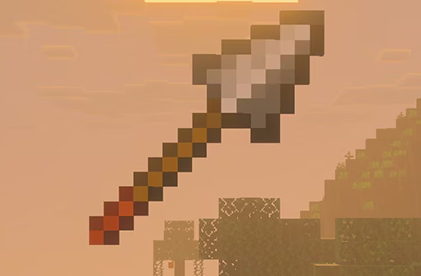
A swift thrusting weapon introduced with the Mounts of Mayhem era. This spear recipe uses 2 sticks and a diamond in a unique angled layout.
Fact: The spear’s shape isn’t the classic straight line—its diamond sits in the top-right, with sticks at center and bottom-left.
2× stick, 1× diamond


Spectral Arrows are special arrows that cause hit entities to glow, making them visible through walls.
Fact: The glowing effect from Spectral Arrows lasts for 10 seconds and can be seen through walls, making them invaluable for tracking enemies that try to hide or escape.
4× glowstone dust, 1× arrow

Solid early combat option until iron.
Fact: Sweep attacks (Java) make swords better against groups than axes.
2× cobblestone, 1× stick


TNT is an explosive block that can be ignited to create powerful explosions.
Fact: Unlike creeper explosions, TNT explosions have a 100% drop rate for blocks they destroy, making TNT mining an efficient way to collect resources in certain situations.
5× gunpowder, 4× sand

Tridents are powerful weapons that can be used in melee combat or thrown at enemies.
Fact: With the Riptide enchantment, a trident can launch the player through the air when used in water or rain, making it one of the most unique movement tools in the game.

Wind Charges are throwable items that create a gust of wind, pushing entities away.
Fact: Wind Charges were added in the 1.21 'Tricky Trials' update alongside the Breeze mob, which can naturally shoot wind charges at players.
1× breeze rod

Emergency early weapon. Swap to stone as soon as you can.
Fact: Axes actually deal more damage than swords at the same tier, but swords swing faster and can sweep.
2× oak planks, 1× stick

Foot armor; great with Depth Strider or Frost Walker later.
Fact: Soul Speed on boots makes soul sand highways fast in the Nether.
4× diamond

The expensive core of a diamond set.
Fact: Protection IV on a diamond chestplate carries most of your defense.
8× diamond

Top Overworld helmet before netherite.
Fact: Helmets are great for Respiration and Aqua Affinity.
5× diamond

Leg armor—biggest single diamond armor piece after the chestplate.
Fact: Leggings cost seven diamonds—plan your first full set carefully.
7× diamond

Cheapest gold armor piece for piglin neutrality.
Fact: Four ingots—best value piglin passport.
4× gold ingot

Piglins-neutral gold chestpiece—low durability.
Fact: Any single piece of gold armor pacifies piglins—helmet is cheaper.
8× gold ingot

Weak defense but piglins leave you alone if it’s worn.
Fact: Gold armor has the highest enchantability—great for fishing enchant books… or just wear a gold helmet for piglins.
5× gold ingot

Gold leg armor for piglin-safe fashion.
Fact: Durability is terrible—bring backups.
7× gold ingot

Iron foot armor for early caves and raids.
Fact: Four ingots—cheap compared to leggings or chestplates.
4× iron ingot

Biggest iron armor craft—worth it for survival.
Fact: Eight ingots equals almost a full stack of iron ore with Fortune.
8× iron ingot

Standard mid-game head protection.
Fact: Five ingots—finish iron armor before you blow it all on a bucket spam.
5× iron ingot

Mid-game leg protection before diamonds.
Fact: Full iron is enough for most Overworld threats.
7× iron ingot


Starter boots; also used with Soul Speed in the Nether.
Fact: Powder snow doesn’t sink you if you’re in leather boots.
4× leather

Dyeable starter helmet from cow leather.
Fact: Leather caps can be dyed—including before you wear them.
5× leather

Dyeable early armor from cows or rabbits.
Fact: Leather armor can be dyed any color—including layered dyes.
7× leather

Dyeable chest armor—most leather per piece.
Fact: Eight leather—breed cows before a full dyed set.
8× leather

The strongest chest armor in Minecraft, providing maximum protection and special benefits.
Fact: The Netherite chestplate provides 8 armor points (4 armor icons), making it the single most protective armor piece in the game.

The strongest head armor in Minecraft, providing maximum protection and special benefits.
Fact: A Netherite helmet provides 3 armor points (1.5 armor icons), the same as Diamond, but with higher durability, knockback resistance, and lava immunity.

Shields are defensive items that can block attacks from mobs and other players.
Fact: Shields can be customized with banners to display unique patterns and designs, allowing for personalized defensive equipment.
6× oak planks, 1× iron ingot


Turtle Helmets provide water breathing for an additional 10 seconds when underwater.
Fact: Despite being made from turtle shells, the Turtle Helmet provides the same armor protection as a leather helmet (1 armor point), but with the unique water breathing ability that no other helmet has.
5× scute


Wolf Armor is protective gear that can be equipped on tamed adult wolves to protect them from damage.
Fact: Wolf Armor was added in the 1.21 'Tricky Trials' update and has 64 durability points. It was designed to help keep your canine companions safe during adventures.
8× armadillo scute


Six beetroots in a bowl—decent early food if you found a village.
Fact: Returns the bowl when eaten, like other stews.
6× beetroot, 1× bowl
Container for stews and soups.
Fact: Empty bowls are returned after you eat most stews.
3× oak planks


Bread is a basic food item that restores 5 hunger points (2.5 hunger bars).
Fact: Bread is one of the oldest food items in Minecraft, added in the Alpha version of the game. It's also one of the most commonly found foods in village chests.
3× wheat


Cake is a placeable food block that can be eaten multiple times to restore hunger.
Fact: A single cake provides 14 hunger points in total when fully eaten, making it one of the most efficient foods in terms of ingredients to hunger ratio.
3× milk bucket, 2× sugar, 1× egg, 3× wheat


Cookies are small food items that restore 2 hunger points (1 hunger bar) each.
Fact: Despite their small hunger restoration, cookies are one of the most efficient foods in terms of ingredients to hunger ratio, as one crafting recipe produces 8 cookies.
2× wheat, 1× cocoa beans


Fuel and storage from smelted kelp—great ocean farm byproduct.
Fact: Dried kelp blocks smelt 20 items—solid early fuel if you live by an ocean.
9× dried kelp


Golden Apples are special food items that provide healing, regeneration, and absorption effects.
Fact: Before Minecraft 1.9, there were two types of Golden Apples: regular and enchanted (made with gold blocks). The enchanted version is no longer craftable and can only be found as treasure.
8× gold ingot, 1× apple


Best breeding food for horses and a Night Vision potion ingredient.
Fact: Golden carrots beat steak on saturation—great before long digs.
8× gold nugget, 1× carrot

Compact wheat storage and horse food boost.
Fact: Landing on hay reduces fall damage—handy under big drops.
9× wheat


Bottled honey that cures poison and makes sugar.
Fact: Drinking honey also clears Poison—great in the Nether.
4× glass bottle, 1× honey block · shapeless


Reassemble nine slices into a full melon block.
Fact: Breaking a melon without Silk Touch usually returns 3–7 slices—not nine.
9× melon slice

Plant these to grow more melons.
Fact: One slice = one seed—break dungeon chests for a free start too.
1× melon slice · shapeless


Mushroom Stew is a food item that restores 6 hunger points (3 hunger bars).
Fact: Mushroom Stew was one of the first complex food items added to Minecraft, requiring multiple ingredients and a container. Unlike most foods, it leaves an empty bowl when eaten.
1× red mushroom, 1× brown mushroom, 1× bowl


Pumpkin Pie is a food item that restores 8 hunger points (4 hunger bars).
Fact: Pumpkin pie was added to Minecraft in the Pretty Scary Update (1.4.2) along with other Halloween-themed items like witch huts and bat mobs.
1× pumpkin, 1× sugar, 1× egg

Carve planting seeds out of a whole pumpkin.
Fact: Shearing a pumpkin gives seeds without needing the crafting table.
1× pumpkin · shapeless


Hearty stew—one of the best early crafted foods.
Fact: A red mushroom works instead of brown in the recipe.
1× cooked rabbit, 1× carrot, 1× baked potato, 1× brown mushroom, 1× bowl

Sweetener for cake, pumpkin pie, and fermented spider eyes.
Fact: One cane = one sugar. Farm cane near water for a steady supply.
1× sugar cane · shapeless


Suspicious Stew grants a status effect based on the flower used during crafting—ranging from Night Vision to Wither.
Fact: Mooshrooms fed a flower and then milked with a bowl produce Suspicious Stew of that flower’s effect—effectively an alternate renewable source.
1× red mushroom, 1× brown mushroom, 1× bowl, 1× flower any · shapeless

Small mixed-item pouch for odds and ends (availability depends on edition/experiments historically).
Fact: Bundles store by occupancy, not by stacking identical items only—great for odds and ends.
1× string, 3× leather

Chests are storage containers that can hold up to 27 stacks of items.
Fact: If you place two chests side by side, they automatically form a large chest with 54 slots instead of 27!
8× oak planks


Ender Chests provide access to a personal interdimensional inventory that can be accessed from any Ender Chest in the world.
Fact: Unlike regular chests, Ender Chests don't drop their contents when broken - they maintain a persistent inventory tied to each player!
8× obsidian, 1× ender eye


Portable chest that keeps its items when broken. End-game inventory multiplier.
Fact: Dye a shulker box like wool—colored boxes stay dyed when broken.
2× shulker shell, 1× chest


Gray stone crafted from diorite and cobble.
Fact: Polished andesite is a modern-build staple.
1× diorite, 1× cobblestone · shapeless


Decorative bamboo floor pattern from two slabs.
Fact: Craft bamboo slabs from bamboo planks first.
2× bamboo slab
Half-block bamboo planks—also used for bamboo mosaic.
Fact: Two bamboo slabs craft one mosaic block.
3× bamboo planks

Crystal block from geode shards—tinted glass ingredient vibes.
Fact: Budding amethyst can’t be crafted or silk-touched—only the plain block can.
4× amethyst shard

Nine bamboo compressed—strip it for planks.
Fact: Use an axe to strip bamboo blocks before crafting planks.
9× bamboo


Clean white building block from Nether quartz.
Fact: Quartz is everywhere in Nether fortresses and ore veins—bring Fortune.
4× quartz


Fastest ice for boat highways—doesn’t melt near light.
Fact: Blue ice is slipperier than packed ice—boat metas love it.
9× packed ice


Compact bone meal storage that also generates in fossils.
Fact: One bone block crafts back into nine bone meal.
9× bone meal


Fired clay brick blocks for chimneys and houses.
Fact: Smelt clay balls into brick items first, then craft the block.
4× brick


Decorative metal links used for hanging signs, lanterns, and vertical detail.
Fact: Chains connect visually when stacked and don’t need a full block of support underneath.
2× iron nugget, 1× iron ingot


A carved copper variant formed by stacking two copper slabs.
Fact: Many chiseled blocks in Minecraft are made from stacking two related slab items—copper follows the convention.
2× copper slab


Reinforced-looking deepslate detail block.
Fact: Those side patterns show up all over ancient cities.
2× cobbled deepslate slab


Piglin-face blackstone detail from bastions.
Fact: The carved pattern is a piglin snout.
2× polished blackstone slab


Carved quartz detail block.
Fact: Make quartz slabs from quartz blocks first.
2× quartz slab


Creeper-face sandstone detail from desert pyramids.
Fact: That carved face is a creeper—spot it in pyramids.
2× sandstone slab


Decorative stone brick with a carved face.
Fact: Stonecutter is faster if you already have stone bricks.
2× stone brick slab


Reassemble clay balls into a clay block for smelting terracotta or bricks.
Fact: Clay generates in lakes, lush caves, and some beaches.
4× clay ball

Deepslate slab used to chisel deepslate.
Fact: Mine deepslate with a pick—cobbled drops unless you Silk Touch.
3× cobbled deepslate

Low wall variant that connects like fences but with a stone look.
Fact: Many stone types have matching walls via stonecutter or crafting.
6× cobblestone

A lattice-like copper decorative block that oxidizes.
Fact: Its open pattern creates a ventilated visual without being fully transparent like glass.
5× copper ingot


Decorative copper variant for slabs, stairs, and builds.
Fact: Cut copper oxidizes through four stages unless you wax it.
4× copper block
Half-block cut copper for roofs and detail.
Fact: Stonecutter also cuts copper blocks into slabs with less waste.
3× cut copper

Oxidizing copper stairs for stylish builds.
Fact: Waxed variants keep the exact oxidation stage you like.
6× cut copper


Cleaner sandstone face for desert builds.
Fact: Chiseled sandstone uses two cut sandstone slabs.
4× sandstone


Dark ocean monument block—needs black dye in the center.
Fact: Older recipes used ink sacs; newer versions want black dye.
8× prismarine shard, 1× black dye


Brick-pattern deepslate for ancient cities vibes.
Fact: Crack them in a furnace for cracked deepslate bricks.
4× polished deepslate

Fine deepslate tiling for floors and roofs.
Fact: Also available directly from a stonecutter.
4× deepslate bricks
Speckled white stone from cobble + quartz.
Fact: Diorite is the hub stone for granite and andesite recipes.
2× cobblestone, 2× quartz


Cave block used for dripstone farms and stalactite décor.
Fact: Pointed dripstone under a dripstone block can fill cauldrons over time.
4× pointed dripstone


Clean brick form of End stone for End cities and hubs.
Fact: End stone is blast-resistant—great around beds used for dragon fights.
4× end stone


Thin windows from smelted sand. Huge yield per craft.
Fact: Six glass blocks become sixteen panes—one of the best block-to-cover ratios in the game.
6× glass

Pinkish stone—craft from diorite + Nether quartz.
Fact: Also generates naturally—crafting is for when quartz is plentiful.
1× diorite, 1× quartz · shapeless


Solid honeycomb for bee-themed builds and waxing copper nearby vibes.
Fact: Honeycomb blocks don’t make you sticky—only honey blocks do.
4× honeycomb

Thin metal bars for windows, prisons, and mob-proof viewing.
Fact: Six iron ingots make sixteen bars—efficient for large façades.
6× iron ingot


Damaging floor block that also creates bubble elevators with water.
Fact: Soul Speed isn’t needed—magma hurts unless you sneak or have Frost Walker/Fire Resistance.
4× magma cream


Overgrown cobble for ruins and dungeon vibes.
Fact: Moss blocks can also mossify cobble in a shapeless craft on newer versions.
1× cobblestone, 1× vine · shapeless


Overgrown stone bricks for ruins and stronghold vibes.
Fact: Moss blocks can also mossify stone bricks in a shapeless craft.
1× stone bricks, 1× vine · shapeless


Warm brick block popular for rustic and mangrove builds.
Fact: Mud brick stairs and walls are stonecutter favorites.
4× packed mud


Fortress-style block from smelted netherrack bricks.
Fact: Smelt netherrack into nether brick items, then craft the block.
4× nether brick

1.5-block-tall barrier mobs usually can’t jump. Great for pens and porch rails.
Fact: Fences connect automatically to solid blocks and other fences.
4× oak planks, 2× stick

Openable fence segment for pens and gardens.
Fact: Fence gates can be opened with redstone like doors.
4× stick, 2× oak planks

Half-block for flooring, roofs, and spawn-proofing.
Fact: Top-half slabs can prevent mob spawns on the surface while keeping a walkable path.
3× oak planks

Compact elevation changes and roof detail.
Fact: Six planks make four stairs—more efficient than full blocks for many shapes.
6× oak planks

Hatch-style door for floors, windows, and mob trap controls.
Fact: Open trapdoors can be climbed like ladders when placed correctly against a wall.
6× oak planks

Non-melting ice for highways—craft into blue ice next.
Fact: Silk Touch ice, craft packed, then blue—classic highway pipeline.
9× ice

Mud packed with wheat—then craft into mud bricks.
Fact: Convert dirt to mud with a water bottle, then pack it.
1× mud, 1× wheat · shapeless

Smooth gray stone for clean modern palettes.
Fact: Pairs well with quartz and concrete.
4× andesite


Columnar polished basalt—great for pillars.
Fact: Basalt generators (lava + blue ice + soul soil) print this forever.
4× basalt


Basalt deltas favorite—polished dark stone.
Fact: Blackstone substitutes for cobble in stone-tool recipes on some versions’ rulesets—check yours.
4× blackstone

Brick form of polished blackstone for bastion-like builds.
Fact: Chiseled polished blackstone uses two polished blackstone slabs.
4× polished blackstone
Slab used for chiseled polished blackstone.
Fact: Bastions showcase these patterns everywhere.
3× polished blackstone
Polished deepslate from cobbled deepslate.
Fact: Next steps: deepslate bricks and tiles via crafting or stonecutter.
4× cobbled deepslate

Bright polished stone—love-it-or-hate-it flooring.
Fact: Often joked about in community builds—still useful contrast.
4× diorite

Smooth granite for counters and floors.
Fact: Stonecutter also polishes with less waste.
4× granite

Ocean monument block that slowly shifts color.
Fact: Guardians drop shards—monument farms print prismarine.
4× prismarine shard
Brick-pattern prismarine for monuments and ocean bases.
Fact: Dark prismarine needs a black dye in addition to shards.
9× prismarine shard


Purple End-city block from popped chorus fruit.
Fact: Smelt chorus fruit to pop it, then craft purpur.
4× popped chorus fruit

End-city style purpur column.
Fact: Same pillar recipe pattern as quartz—two blocks stacked in craft.
2× purpur block

Column-style quartz for modern and End builds.
Fact: Chiseled quartz is the slab-on-slab sibling craft.
2× quartz block
Quartz half-block used for chiseled quartz.
Fact: Stonecutter cuts quartz with less waste.
3× quartz block


Red fortress-style bricks from nether brick + wart.
Fact: You need nether wart farms for big red brick projects.
2× nether brick, 2× nether wart


Badlands sandstone that won’t fall like red sand.
Fact: Same family of cut/chiseled crafts as normal sandstone.
4× red sand
Desert building block that doesn’t fall like sand.
Fact: Smelt sandstone into smooth sandstone for a cleaner look.
4× sand
Sandstone slab—and the ingredient for chiseled sandstone.
Fact: Desert pyramids are full of sandstone variants.
3× sandstone


Full snow block for builds and snow golems.
Fact: Silk Touch keeps snow layers as items; otherwise you get snowballs.
4× snowball
Slab form of stone bricks—also makes chiseled stone bricks.
Fact: Two slabs stacked in the grid make the chiseled block.
3× stone bricks

Classic stronghold-style building block from smelted stone.
Fact: Strongholds generate with stone bricks—including cracked and mossy variants.
4× stone

See-through block that blocks light—perfect for mob farms and dark rooms.
Fact: Tinted glass doesn’t drop without Silk Touch—bring the right pick.
4× amethyst shard, 1× glass


Dye + sand + gravel—touch water to harden into concrete.
Fact: Any dye color works the same way—white is the most searched.
1× white dye, 4× sand, 4× gravel · shapeless

Barrels are storage blocks that function like chests but can open when blocked above and emit comparator signals.
Fact: Unlike chests, barrels can be opened even if a solid block is directly above them, making them ideal for cramped storage rooms.
6× stick, 2× oak planks

Sleep through the night, set your respawn point, and (in the End) explode for dragon fights.
Fact: Beds explode in the Nether and the End—deadly for you, useful against the dragon.
3× white wool, 3× oak planks

Crafted bee home you can place for honey and honeycomb farms.
Fact: Campfires under hives keep bees calm when you harvest.
6× oak planks, 3× honeycomb


Blast Furnaces smelt ores and metal equipment twice as fast as furnaces but cannot cook food.
Fact: Blast furnaces consume fuel at double speed to match their higher output rate, maintaining the same fuel efficiency per item as furnaces.
5× iron ingot, 1× furnace, 3× smooth stone


Write and sign books for guides, shops, or lore.
Fact: Signing locks the book into a written book you can copy later.
1× book, 1× ink sac, 1× feather · shapeless

Carry water, lava, milk, or powder snow. Essential for infinite water and obsidian casting.
Fact: Empty buckets stack; filled ones don’t—plan inventory space before a long trip.
3× iron ingot


Cartography Tables are used for cloning, locking, and scaling maps, and for applying map decorations.
Fact: Before the cartography table, players had to spend extra paper to resize or clone maps; this workstation dramatically reduces paper costs.
2× oak planks, 2× paper

Hold water, lava, powder snow, or dyed water for washing leather.
Fact: A cauldron is the only portable water source that works in the Nether.
7× iron ingot

Turn plant leftovers into bone meal.
Fact: Any wood slab works—seven slabs craft one composter.
7× oak slab

Firework Rockets are used for Elytra flight propulsion and can also create visual explosions when combined with Firework Stars.
Fact: Flight duration is determined purely by the amount of gunpowder (1–3). Without stars, rockets produce no explosion particles—perfect for long-distance travel.
1× paper, 1× gunpowder · shapeless

Fletching Tables assign the fletcher profession to villagers; crafting functionality is currently unused in Java.
Fact: The fletching table has had a GUI placeholder for years but still lacks a functional crafting interface in Java Edition.
2× flint, 4× oak planks
Empty bottles for water, potions, honey, and dragon’s breath.
Fact: Fill at water source blocks or cauldrons.
3× glass

Door that only opens with redstone—zombies can’t break it.
Fact: Unlike wooden doors, iron doors ignore hand clicks; buttons or pressure plates are required.
6× iron ingot

Redstone-only trapdoor—mobs and players can’t open it by hand.
Fact: Like iron doors, iron trapdoors need a signal—buttons, plates, or levers.
6× iron ingot

Climbable block for mineshafts, bases, and vertical travel.
Fact: Ladders only need a solid block behind them to place; they don’t need support underneath.
7× stick

Redirects lightning strikes to protect builds (and charge creepers on purpose).
Fact: A lightning rod channels strikes within a sizable radius—check the wiki for your version’s exact range.
3× copper ingot

Looms are used to apply banner patterns quickly and cheaply, supporting special pattern items.
Fact: Before looms, complex banner crafting required large amounts of dye and pattern memorization; the loom simplified the process.
2× string, 2× oak planks

Opens Ominous Vaults—harder variant vaults with significantly better loot. Tied to the ominous state of Trial Spawners.
Fact: Triggering an ominous encounter increases both the danger and the potential rewards—bring better gear and more keys.

Fast, gravity-aware building blocks you can climb inside.
Fact: Breaking the bottom scaffolding drops the whole tower—perfect for cleanup.
6× bamboo, 1× string

Smithing Tables upgrade diamond gear to netherite and apply armor trims using smithing templates.
Fact: Prior to 1.20, smithing tables only served as job site blocks; their redesign introduced smithing templates and trim customization.
2× iron ingot, 4× oak planks

Smokers cook food items twice as fast as furnaces but cannot smelt ores or non-food items.
Fact: Despite its speed, the smoker provides the same experience yield per item as a normal furnace when cooking food.
8× oak log, 1× furnace


Blue campfire that deals more damage and repels piglins.
Fact: Soul sand works instead of soul soil in the recipe.
3× stick, 1× soul soil, 3× oak log

A Stonecutter allows precise conversion of stone blocks into stairs, slabs, and other variants with no material waste.
Fact: Using a stonecutter to craft stairs uses 1 block per stair vs 1.5 blocks when using traditional crafting recipes.
1× iron ingot, 3× stone

Trial Keys are single‑use items that open standard reward vaults inside Trial Chambers. They’re core to the new dungeon‑style progression introduced with Tricky Trials.
Fact: Each Trial Key is consumed on use. If multiple players bring keys, you can chain vaults for back‑to‑back rewards.

Always-on redstone power source and compact dust storage.
Fact: Unlike redstone dust, the block powers adjacent components without needing a signal path on top.
9× redstone


Toggleable light source from the Tricky Trials update. Emits a redstone signal when lit.
Fact: Copper bulbs toggle on a redstone pulse and keep state—handy for latches.
3× copper block, 1× blaze rod, 1× redstone

A decorative metal door that oxidizes over time unless waxed.
Fact: Like other copper blocks, you can stop oxidation with honeycomb to keep a preferred stage.
6× copper ingot

A copper trapdoor that weathers through oxidation stages.
Fact: Trapdoors share many redstone behaviors with doors but are often used for vertical movement tricks.
6× copper ingot


The Crafter is a redstone-controllable block that crafts items automatically when given a valid recipe and receives a pulse.
Fact: Its slot-toggling interface lets redstone engineers selectively enable recipe positions, unlocking conditional multi-output machines.
5× iron ingot, 2× redstone, 1× crafting table, 1× dropper

Daylight Detectors emit redstone signals based on the time of day, with stronger signals during daylight hours.
Fact: Daylight Detectors can be inverted by right-clicking them, causing them to emit stronger signals at night instead of during the day!
3× glass, 3× quartz, 3× oak slab

Dispensers are blocks that can shoot projectiles and place certain blocks when activated by redstone.
Fact: Dispensers can perform unique actions with certain items, such as shearing sheep, igniting TNT, or even equipping armor on mobs that are standing in front of them.
7× cobblestone, 1× bow, 1× redstone
Droppers are blocks that eject items when activated by redstone, but unlike dispensers, they don't shoot projectiles.
Fact: While dispensers and droppers look very similar, droppers will always simply drop or push items, while dispensers will attempt to use the items they contain.
7× cobblestone, 1× redstone


Fire Charges are projectiles that can be used to light fires or fired from dispensers.
Fact: Fire charges can be fired from dispensers to create a fireball similar to those shot by blazes, making them useful for traps or defense systems.
1× gunpowder, 1× blaze powder, 1× coal
Sticky, slow-fall block used in piston machines and parkour.
Fact: Crafting honey blocks returns the glass bottles.
4× honey bottle

Hoppers are blocks that can move items between containers and can be used to create item transport systems.
Fact: A single hopper can transfer up to 9,000 items per hour when operating at maximum efficiency, making them essential for large-scale automation.
5× iron ingot, 1× chest

Toggle on/off switch for redstone and doors.
Fact: Levers stick in position—perfect for leaving a circuit powered.
1× stick, 1× cobblestone

Plays a note when powered. Instrument changes with the block underneath.
Fact: Right-click cycles pitch; the block below picks the instrument (wood, stone, sand, glass, etc.).
8× oak planks, 1× redstone

Wooden momentary switch—also activated by arrows.
Fact: Wooden buttons stay pressed longer than stone and can be triggered by projectiles.
1× oak planks · shapeless

Detects players, mobs, and some items when stepped on.
Fact: Wooden plates detect more entity types than stone plates.
2× oak planks

Observers detect changes in the block they face and emit a redstone pulse when a change occurs.
Fact: Observers were originally added in Minecraft Pocket Edition before being brought to the Java Edition, one of the few features to make this transition.
6× cobblestone, 2× redstone, 1× quartz

Pistons are blocks that can push blocks and entities when activated by redstone.
Fact: Pistons were originally created as a mod by Hippoplatimus before being officially added to Minecraft in the Beta 1.7 update.
3× oak planks, 4× cobblestone, 1× iron ingot, 1× redstone


Redstone Comparators can compare signal strengths, measure container fullness, and maintain signal strength.
Fact: Redstone comparators can detect the state of many blocks, including cakes - each bite taken from a cake reduces the signal strength by 1, allowing for some creative redstone mechanisms!
3× redstone torch, 1× quartz, 3× stone


Redstone Lamps are light-emitting blocks that activate when powered by redstone.
Fact: Redstone lamps emit a light level of 15 when powered, the same as glowstone, making them one of the brightest light sources in the game.
4× redstone, 1× glowstone

Redstone Repeaters can extend redstone signals, add delays, and prevent signals from traveling backwards.
Fact: Redstone repeaters can be locked by powering them from the side with another repeater, preventing their output from changing until unlocked - a feature many players don't know about!
2× redstone torch, 1× redstone, 3× stone
Power source and inverter—core to clocks and logic.
Fact: A redstone torch burns out if it toggles too fast—classic clock gotcha.
1× redstone, 1× stick


Bouncy block that moves adjacent blocks with sticky pistons.
Fact: Slime blocks pull most adjacent blocks when a sticky piston moves them—honey blocks behave differently with entities.
9× slime ball

Sticky Pistons are pistons that can both push and pull blocks when activated by redstone.
Fact: Unlike regular pistons, sticky pistons can pull blocks back when they retract, but they can't pull entities like players or mobs.
1× slime ball, 1× piston

Short pulse stone switch for doors and circuits.
Fact: Stone buttons ignore arrows—use wood if you want projectile activation.
1× stone · shapeless

Player-and-mob detector with a clean stone look.
Fact: Stone plates ignore items—handy when you don’t want dropped loot triggering doors.
2× stone

Targets emit redstone signals when hit by projectiles, with signal strength based on accuracy.
Fact: The closer your projectile hits to the center of the target, the stronger the redstone signal it emits, with a perfect bullseye producing a signal strength of 15.
4× redstone, 1× hay block

Chest that emits a redstone signal when opened.
Fact: You can place a trapped chest beside a normal chest—they won’t form a double chest together.
1× tripwire hook, 1× chest · shapeless
String between two hooks makes a tripwire circuit.
Fact: Shearing tripwire breaks it silently—useful against player traps.
1× iron ingot, 1× stick, 1× oak planks

Activator Rails activate minecarts with TNT and can eject players from minecarts when powered.
Fact: Activator rails were added in the 1.5 'Redstone Update' to provide more control over minecart behavior, especially for automated systems.
6× iron ingot, 2× stick, 1× redstone torch

Boats are vehicles that can travel on water, allowing for fast water transportation.
Fact: Boats can be crafted with any type of wood, resulting in different colored boats. They were one of the first vehicles added to Minecraft.
5× oak planks

Carrots on Sticks are items used to control saddled pigs, making them move in the direction you want.
Fact: When using a Carrot on a Stick, pigs move 40% faster than their normal speed, but still slower than horses. The item gradually loses durability as you use it.
1× fishing rod, 1× carrot

Detector Rails emit redstone signals when a minecart passes over them.
Fact: Detector rails emit a redstone signal with a strength of 15, regardless of the minecart's speed or contents, making them reliable triggers for redstone contraptions.
6× iron ingot, 1× pressure plate, 1× redstone

Elytra are wings that allow players to glide through the air, providing the closest thing to flight in survival Minecraft.
Fact: Elytra were added in the 1.9 Combat Update and were the first item to give players the ability to fly in survival mode without commands or mods.

Leads (or leashes) are used to tie mobs to fences or lead them around.
Fact: Leads can be used on almost any passive mob, but not on other players, villagers, or hostile mobs. They can even be used on boats!
4× string, 1× slime ball

Minecarts are vehicles that travel on rails, allowing for fast transportation.
Fact: Minecarts were one of the first transportation methods added to Minecraft, appearing in the Alpha version of the game in June 2010.
5× iron ingot

Haul items along rails—backbone of item trains.
Fact: Craft is shapeless: chest + minecart in any arrangement.
1× chest, 1× minecart · shapeless

Self-powered minecart that pushes other carts when fueled with coal.
Fact: Java-only for pushing gameplay—Bedrock doesn’t use furnace carts the same way.
1× furnace, 1× minecart · shapeless

Picks up items off tracks and from containers above the rail.
Fact: Hopper minecarts can suck items through a solid block under the rail in some setups—test your version.
1× hopper, 1× minecart · shapeless

Exploding minecart for rail traps and mining comedy.
Fact: Activator rails arm/disarm TNT carts—handle carefully.
1× tnt, 1× minecart · shapeless

Boat that carries a chest—mobile storage on water.
Fact: Any wood boat + chest works; the result matches the boat’s wood type.
1× chest, 1× boat · shapeless

Powered Rails accelerate minecarts when powered by redstone, allowing for faster travel.
Fact: A powered rail can accelerate a minecart to a maximum speed of 8 blocks per second, which is faster than a player's walking speed but slower than sprinting.
6× gold ingot, 1× stick, 1× redstone

Rails are tracks that minecarts can travel on, forming the basis of rail transportation systems.
Fact: Rails automatically connect to form curves when placed next to each other, making it easy to create complex rail networks without special curved pieces.
6× iron ingot, 1× stick

Saddles let you steer horses, donkeys, mules, pigs, and striders. Craftable since Chase the Skies (1.21.6) with 3 leather and 1 iron ingot.
Fact: Saddles were uncraftable for years, then Chase the Skies (1.21.6) added a simple leather + iron recipe still used in 26.2.
3× leather, 1× iron ingot


Warped Fungus on a Stick is used to control saddled striders in the Nether, similar to how Carrots on Sticks control pigs.
Fact: Striders are the only mobs that can walk on lava without taking damage, making them invaluable for Nether exploration. With a Warped Fungus on a Stick, you can guide them across vast lava oceans!
1× fishing rod, 1× warped fungus

Compasses point to the world spawn point, helping players navigate the overworld.
Fact: In the Nether and End dimensions, compasses spin wildly and don't point in any specific direction unless linked to a lodestone.
4× iron ingot, 1× redstone


Lodestones are special blocks that can be linked to compasses, allowing them to point to the lodestone instead of spawn.
Fact: Lodestones are one of the few blocks that require netherite to craft, making them quite valuable. They're the only way to make compasses work in dimensions other than the Overworld.
8× chiseled stone bricks, 1× netherite ingot

Maps show a bird's-eye view of the surrounding terrain, helping players navigate and mark important locations.
Fact: Maps in Minecraft are actually centered on where they are first opened, not where they are crafted. This allows players to create maps of specific areas by traveling there first.
8× paper, 1× compass


Recovery Compasses point to the location of your most recent death, helping you recover your items.
Fact: The Recovery Compass was added in the 1.19 'The Wild Update' along with Ancient Cities and the Warden. It only works if you've died at least once in the current session.
8× echo shard, 1× compass

Armor Stands are entities that can display armor and held items.
Fact: In Java Edition, armor stands can be posed in various positions using commands, allowing for creative displays and even simple animations when combined with redstone.
6× stick, 1× stone slab

Bookshelves are decorative blocks that also enhance enchanting tables placed nearby.
Fact: Placing bookshelves around an enchanting table in a specific pattern can allow for level 30 enchantments, the highest possible in the game without commands.
6× oak planks, 3× book

Campfires are blocks that provide light, cook food, and emit smoke signals.
Fact: Campfire smoke will rise up to 10 blocks if there's nothing blocking it, making it useful as a navigation marker that can be seen from far away.
3× stick, 1× coal, 3× oak log

Dyeable light source that can sit on cakes.
Fact: Waterlog candles or stack up to four in one block for brighter light.
1× string, 1× honeycomb

Stores up to six enchanted books and can talk to redstone comparators.
Fact: A comparator reads which slots have books—secret door candy.
6× oak planks, 3× oak slab

Flower Pots are decorative blocks that can hold small plants and fungi.
Fact: Flower pots can hold more than just flowers - they can also contain saplings, mushrooms, cacti, bamboo, and even dead bushes, making them versatile decoration blocks.
3× brick


Item frame that makes the displayed item glow.
Fact: Glow ink comes from glow squids—easy ocean night hunting.
1× item frame, 1× glow ink sac · shapeless
Bright Nether light block and potion ingredient source.
Fact: Fortune on glowstone multiplies dust—Silk Touch keeps the block.
4× glowstone dust
Item Frames are decorative blocks that can display items and maps on walls.
Fact: When a map is placed in an item frame, it expands to show the full map and becomes interactive, allowing players to see their position on the map in real-time.
8× stick, 1× leather


Lit pumpkin that stays bright and can power golems.
Fact: Jack o'lanterns work as golem “heads” just like carved pumpkins.
1× carved pumpkin, 1× torch

Jukeboxes play music discs that can be found in dungeons and other structures.
Fact: The first music disc added to Minecraft was 'C418 - 13', and it was intentionally designed to sound eerie and mysterious.
8× oak planks, 1× diamond

Lanterns are decorative light sources that can be placed on the ground or hung from ceilings.
Fact: Lanterns emit a light level of 15, the same as torches, but they're more visually appealing and can be placed in more creative ways, like hanging from chains.
8× iron nugget, 1× torch

Lecterns are blocks that can hold books and allow multiple players to read them simultaneously.
Fact: Lecterns emit redstone signals corresponding to the current page being read, making them useful for creating page-turning mechanisms or book-based puzzles.
4× oak slab, 1× bookshelf

Ceiling or wall-mounted signs that hang from chains.
Fact: Hanging signs can attach under blocks or to the side of chains.
2× chain, 6× oak planks

Writable text for labels, shops, and notes.
Fact: You can dye sign text and apply glow ink for readable underground signs.
6× oak planks, 1× stick


Paintings are decorative items that display various artworks on walls.
Fact: There are 26 different paintings in Minecraft, ranging from small 1x1 paintings to large 4x4 masterpieces. Many of them are references to artwork from the game 'Doom' and paintings by Kristoffer Zetterstrand.
8× stick, 1× wool


Bright underwater-friendly light block.
Fact: Sea lanterns drop crystals when broken unless you use Silk Touch.
4× prismarine shard, 5× prismarine crystals


Hanging blue lantern with piglin-repelling soul fire.
Fact: Same iron-nugget frame as a normal lantern—swap in a soul torch.
8× iron nugget, 1× soul torch
Blue flame torch that repels piglins and fuels soul lanterns.
Fact: Soul sand works in place of soul soil for the craft.
1× coal, 1× stick, 1× soul soil

Blank banner for loom patterns and maps markers.
Fact: Loom patterns are how you get those fancy shield and banner looks.
6× white wool, 1× stick

Thin floor cover. Dye wool first for other colors.
Fact: Carpets don’t block light and can sit on almost any block.
2× white wool


Beacons are powerful blocks that provide status effects to nearby players when powered by a pyramid of mineral blocks.
Fact: A fully powered beacon requires 164 mineral blocks (iron, gold, diamond, emerald, or netherite) to build the maximum size pyramid!
5× glass, 1× nether star, 3× obsidian

Brewing Stands are used to create potions by adding ingredients to water bottles.
Fact: The Brewing Stand was added in the Beta 1.9 pre-release, the same update that introduced the Nether fortress and blaze mobs.
1× blaze rod, 3× cobblestone


Conduits are powerful blocks that provide underwater breathing, night vision, and attack hostile mobs when properly activated.
Fact: When fully activated with a proper frame of prismarine blocks, a conduit's range extends to a 96-block radius, making it possible to build extensive underwater cities.
8× nautilus shell, 1× heart of the sea

Enchanting Tables allow players to enchant tools, weapons, and armor with special abilities.
Fact: The floating characters around an Enchanting Table are actually from the Standard Galactic Alphabet, a fictional writing system from the Commander Keen series of games!
1× book, 2× diamond, 4× obsidian


End Crystals are objects that heal the Ender Dragon and can be used to respawn it after it has been defeated.
Fact: End Crystals create one of the most powerful explosions in Minecraft when destroyed, even stronger than TNT. They're used by the Ender Dragon to heal during battle.
7× glass, 1× ender eye, 1× ghast tear

Throws to point toward a stronghold; also activates End portal frames.
Fact: Eyes can shatter when thrown—bring extras when triangulating a stronghold.
1× blaze powder, 1× ender pearl · shapeless


Respawn Anchors allow players to set their spawn point in the Nether, similar to how beds work in the Overworld.
Fact: If you try to use a Respawn Anchor in the Overworld or End, it will explode with a force similar to a charged creeper, making it a potential weapon or trap.
6× crying obsidian, 3× glowstone
Black Dye is used to color various blocks and items black, such as wool, terracotta, and glass.
Fact: Black dye was originally just ink sacs from squids, but wither roses were added as an alternative source in the Village & Pillage update.
1× ink sac
Brewing stand fuel and Eyes of Ender component.
Fact: One blaze rod becomes two powder—enough to fuel several brew cycles.
1× blaze rod · shapeless

Dense fuel and storage—smelts like many pieces of coal.
Fact: A coal block smelts 80 items—more efficient than nine loose coal.
9× coal
Nine copper ingots—oxidizes unless waxed.
Fact: Wax with honeycomb to freeze the oxidation stage you want.
9× copper ingot

Nine diamonds in one block—secure storage and beacon pyramids.
Fact: Beacon pyramids accept diamond, iron, gold, emerald, or netherite blocks.
9× diamond


Compact emerald storage from villager trading hauls.
Fact: Emeralds come from trading and mountain ores—not classic cave mining.
9× emerald

Nine gold ingots compressed—beacon fuel and piglin flex.
Fact: Piglin bartering cares about ingots, not blocks—break them down first.
9× gold ingot
Compact storage for nine iron ingots. Also used in anvils and beacons.
Fact: You can craft the block back into nine ingots anytime.
9× iron ingot


Storage block for enchanting fuel.
Fact: Enchanting still consumes lapis as items—break the block when you need dust.
9× lapis lazuli

The flex storage block—and beacon pyramid royalty.
Fact: Netherite blocks are blast-resistant and float on lava in item form… the block itself is just absurdly expensive.
9× netherite ingot


Bulk raw copper storage from big vein finds.
Fact: Copper veins are huge—raw blocks keep your inventory sane.
9× raw copper


Nine raw gold compressed for storage.
Fact: Raw gold blocks still need smelting—piglins ignore them until they’re ingots.
9× raw gold


Compact raw iron before you smelt it.
Fact: Blast furnaces love raw ore blocks for bulk smelting runs.
9× raw iron


Blue Dye is used to color various blocks and items blue, such as wool, terracotta, and glass.
Fact: Blue dye was originally obtained from lapis lazuli, but cornflowers were added as an alternative source in the Village & Pillage update.
1× cornflower

Instant fertilizer for crops, saplings, grass, and moss.
Fact: A single bone yields three bone meal—skeleton farms print fertilizer.
1× bone · shapeless
Books are crafting materials used for enchanting tables, bookshelves, and written books.
Fact: Books are one of the few items in Minecraft that can store large amounts of player-written text, with each book able to contain up to 100 pages of 798 characters each.
3× paper, 1× leather
Breeze Rods are rare items dropped by Breeze mobs found in Trial Chambers.
Fact: Breeze Rods were added in the 1.21 'Tricky Trials' update and are the Breeze equivalent of Blaze Rods. The Breeze mob has a unique wind attack pattern that can launch players into the air.
Bricks are crafting materials used to create brick blocks and other brick-related items.
Fact: Despite being made from clay, which is found underwater, bricks require smelting in a furnace - representing the real-world process of firing clay to create hardened bricks.
1× clay ball

Brown Dye is used to color various blocks and items brown, such as wool, terracotta, and glass.
Fact: Brown dye comes from cocoa beans, which grow on jungle trees, making it one of the few dyes tied to a specific biome.
1× cocoa beans


Cyan Dye is used to color various blocks and items cyan, such as wool, terracotta, and glass.
Fact: Cyan dye is created by mixing blue and green dyes, making it one of the few dyes that perfectly follows real-world color theory.
1× blue dye, 1× green dye


Corrupts potions into their negative variants (Poison, Instant Damage, Invisibility, etc.).
Fact: One of the few shapeless brewing crafts—order in the grid doesn’t matter.
1× spider eye, 1× brown mushroom, 1× sugar · shapeless

Brewing ingredient for Potions of Healing.
Fact: You can’t eat glistering melon—it’s brew-only.
8× gold nugget, 1× melon slice
Tiny gold units used in clocks, powered rails, and golden carrots.
Fact: Zombified piglins drop nuggets—a steady gold income in the Nether.
1× gold ingot · shapeless

Gray Dye is used to color various blocks and items gray, such as wool, terracotta, and glass.
Fact: Gray dye is one of the few dyes that doesn't have a direct flower source and must be crafted by combining white and black dyes.
1× white dye, 1× black dye

Green Dye is used to color various blocks and items green, such as wool, terracotta, and glass. You have to use a FURNACE for this Dye
Fact: Unlike most dyes that come from flowers, green dye is obtained by smelting cacti in a furnace, making it the only dye that requires cooking.
1× cactus
A dense, late‑game component tied to Trial Chambers. Combine with a Breeze Rod at a crafting table to make the Mace, a high‑impact weapon.
Fact: Because Heavy Cores are locked behind ominous content, many worlds craft far fewer maces than swords or axes—keeping them prestigious.
Iron Ingots are versatile crafting materials used in many recipes for tools, armor, and other items.
Fact: Iron is one of the most used materials in Minecraft, appearing in over 30 different crafting recipes - more than any other material except wood.
9× iron nugget
Small iron pieces for chains, lanterns, and compact storage from ingots.
Fact: Nine nuggets craft back into one ingot—same ratio as gold.
1× iron ingot · shapeless


Light Blue Dye is used to color various blocks and items light blue, such as wool, terracotta, and glass.
Fact: Light blue dye can be crafted from blue orchids found in swamps, or by combining blue dye with white dye, giving players multiple ways to obtain it.
1× blue orchid


Light Gray Dye is used to color various blocks and items light gray, such as wool, terracotta, and glass.
Fact: Light gray dye can be crafted from azure bluet flowers, white tulips, or oxeye daisies, but can also be made by combining white dye with black dye.
1× azure bluet

Lime Dye is used to color various blocks and items lime green, such as wool, terracotta, and glass.
Fact: Lime dye is created by lightening green dye with white dye, making it one of the few dyes that requires another dye as an ingredient.
1× green dye, 1× white dye


Magenta Dye is used to color various blocks and items magenta, such as wool, terracotta, and glass.
Fact: Magenta dye has one of the most complex alternative crafting recipes, as it can be made by combining purple dye with pink dye, or by mixing blue, red, and pink dyes together.
1× allium
Fire Resistance potion ingredient. Also drops from magma cubes.
Fact: You can craft it or farm magma cubes in the Nether—both are valid.
1× blaze powder, 1× slime ball · shapeless

Netherite Ingots are the most valuable and durable material in Minecraft, used to upgrade diamond gear.
Fact: Netherite items don't burn in lava, making them the only tools and armor that are safe to use around lava pools in the Nether without fear of losing them if you fall in.
4× netherite scrap, 4× gold ingot
Smelt Ancient Debris to obtain Netherite Scrap. Combine 4 scraps with 4 gold ingots to craft a Netherite Ingot for upgrading gear at a Smithing Table.
Fact: One Netherite Ingot requires 4 Ancient Debris smelts (4 scraps) plus 4 gold ingots—true end‑game grind.


A smithing template used to upgrade diamond gear to netherite. It can be duplicated once you find one.
Fact: The netherite upgrade template was added in the 1.20 update (Trails & Tales) as part of the smithing rework, making the netherite upgrade process more involved but also allowing players to duplicate templates once they find one.
7× diamond, 1× netherite upgrade smithing template, 1× netherrack


Orange Dye is used to color various blocks and items orange, such as wool, terracotta, and glass.
Fact: Orange dye can be crafted from orange tulips or by combining red and yellow dyes, following real-world color mixing principles.
1× orange tulip
Paper is a crafting material used for maps, books, and other items.
Fact: Paper was one of the first crafting materials added to Minecraft that wasn't directly used as a tool or block, but rather as a component for more complex items.
3× sugar cane

Phantom Membranes are late‑game utility drops: repair Elytra in an anvil and brew Potions of Slow Falling when combined with an Awkward Potion.
Fact: Phantoms only spawn if you haven’t slept for three in‑game days. Slow Falling lasts 1:30 by default and 4:00 with Redstone.


Pink Dye is used to color various blocks and items pink, such as wool, terracotta, and glass.
Fact: Pink dye can be crafted from pink tulips or peony flowers, but can also be created by mixing red dye with white dye, giving players multiple ways to obtain it.
1× pink tulip


Purple Dye is used to color various blocks and items purple, such as wool, terracotta, and glass.
Fact: Purple dye is created by mixing red and blue dyes, following traditional color theory. In medieval times, purple dye was extremely expensive and often reserved for royalty.
1× blue dye, 1× red dye

Red Dye is used to color various blocks and items red, such as wool, terracotta, and glass.
Fact: Red dye is one of the most versatile dyes, as it can be combined with other primary colors to create orange, purple, and pink dyes.
1× poppy
White Dye is used to color various blocks and items white, such as wool, terracotta, and glass.
Fact: White dye can be crafted from lily of the valley flowers or by bone meal, making it one of the easiest dyes to obtain in large quantities.
1× lily of the valley


Yellow Dye is used to color various blocks and items yellow, such as wool, terracotta, and glass.
Fact: Yellow dye from dandelions is one of the easiest dyes to obtain in the game, as dandelions are common in most biomes.
1× dandelion

Totems of Undying prevent death when held in either hand, granting a second chance at life.
Fact: When a Totem of Undying activates, it creates a spectacular visual effect with green particles and a distinctive sound, making survival feel truly magical.

Disc Fragments (5) are pieces found in Ancient City chests; 9 combine in a crafting grid to form Music Disc 5.
Fact: This is one of the only music discs assembled via crafting rather than dropping from a mob interaction.

Goat Horns play one of several unique sounds depending on the variant and are used for signaling or role-play.
Fact: Each horn variant corresponds to a different sound. Screaming goats ram more frequently, making variant hunting easier.

Assemble nine Disc 5 fragments from ancient cities.
Fact: Fragments hide in ancient city chests—bring wool for quiet footsteps.
9× disc fragment 5

The Dragon Egg is a unique decorative block that appears on the exit portal after defeating the Ender Dragon for the first time.
Fact: The Dragon Egg is the only truly unique item in Minecraft - only one can exist in a world naturally (unless the dragon is respawned using end crystals in newer versions).
Echo Shards are Deep Dark relics found in Ancient City chests. Combine 8 with a compass to craft a Recovery Compass that points to your last death.
Fact: Recovery compasses made from echo shards point to your last death location, a unique utility among navigation tools.
The Enchanted Golden Apple (sometimes called a Notch Apple) cannot be crafted and provides powerful absorption and resistance buffs.
Fact: It was once craftable using 8 gold blocks around an apple, but that recipe was removed in 1.9 to increase its rarity.
Hearts of the Sea are rare items used to craft conduits, which provide underwater breathing and vision.
Fact: The Heart of the Sea is one of the few items in Minecraft that cannot be obtained through normal gameplay methods like mining or crafting - it can only be found in buried treasure chests.

Name Tags are used to name mobs, preventing them from despawning and giving them custom names.
Fact: If you name a mob 'Dinnerbone' or 'Grumm' using a name tag, the mob will flip upside down - a fun easter egg named after Minecraft developers.
Nautilus Shells are rare items used to craft conduits, which provide underwater breathing and vision.
Fact: The nautilus is a real-life marine creature that has existed for over 500 million years, making it one of the oldest surviving species on Earth. The Minecraft item is based on its distinctive spiral shell.
Nether Stars are rare items dropped by the Wither boss, used to craft beacons.
Fact: The Nether Star is one of the few items in Minecraft that is completely immune to explosions, making it safe even if a creeper blows up your storage area.
Scutes are items dropped by baby turtles when they grow into adults, used to craft turtle shells.
Fact: The word 'scute' comes from the Latin word 'scutum' meaning shield, referring to the protective plates on a turtle's shell. In Minecraft, they're one of the few items that can only be obtained through animal husbandry.

Wither Skeleton Skulls are rare mob heads used to summon the Wither boss by placing three atop a T‑shaped soul sand or soul soil frame.
Fact: Looting III raises the skull drop chance to ~5.5%. Charged creeper explosions can also force a skull drop—handy for head collections.

The Bolt Armor Trim allows you to customize your armor with a lightning-inspired pattern.
Fact: The Bolt trim features a lightning bolt-like design, making it particularly impressive when applied with gold or copper materials for a striking electric effect.

The Coast Armor Trim allows you to customize your armor with a wave-like pattern.
Fact: The Coast trim features a wave-like pattern that perfectly complements ocean-themed builds and adventurers who spend their time sailing the seas.

The Dune Armor Trim allows you to customize your armor with a pattern inspired by desert dunes.
Fact: The Dune trim features wavy patterns reminiscent of desert sand dunes, making it a perfect match for desert explorers and adventurers.

The Eye Armor Trim allows you to customize your armor with an eye-like pattern.
Fact: The Eye trim creates an ominous watching effect on your armor, reminiscent of the all-seeing Eye of Ender, making it popular among End explorers.

The Flow Armor Trim allows you to customize your armor with a flowing pattern.
Fact: The Flow trim creates a sense of movement across your armor, with lines that appear to flow downward, making it a dynamic choice for armor customization.

The Host Armor Trim allows you to customize your armor with a unique pattern.
Fact: The Host trim was introduced alongside other archeology items, linking it to the ancient civilizations that once inhabited the Minecraft world.

The Raiser Armor Trim allows you to customize your armor with a unique pattern.
Fact: The Raiser trim has an ascending design that creates a sense of upward movement on your armor pieces.

The Rib Armor Trim allows you to customize your armor with a unique pattern reminiscent of skeletal structures.
Fact: The Rib armor trim creates a bone-like pattern on your armor, perfect for players who want to create a spooky or Nether-themed appearance.

The Sentry Armor Trim allows you to customize your armor with a unique sentry pattern.
Fact: Armor Trims are purely cosmetic and don't provide any gameplay benefits, but they allow for unique customization of your armor's appearance.

The Shaper Armor Trim allows you to customize your armor with a unique pattern.
Fact: Armor Trims were added in the 1.20 update and significantly expanded the visual customization options for players without needing to use resource packs.

The Silence Armor Trim allows you to customize your armor with a unique pattern.
Fact: The trim pattern changes depending on which mineral you use with it - using different minerals like iron, gold, diamond, or netherite will create different color schemes.

The Spire Armor Trim allows you to customize your armor with a unique pattern.
Fact: When trimming armor, the material used affects the color of the trim. For example, copper gives an orange-brown color, while netherite gives a dark gray color.

The Tide Armor Trim allows you to customize your armor with a unique oceanic pattern.
Fact: Armor trims can be applied to any type of armor including leather, iron, gold, diamond, netherite, and even chainmail or turtle shells.

The Vex Armor Trim allows you to customize your armor with a unique pattern inspired by the vex mob.
Fact: The Vex armor trim is inspired by the small ghostly vex mobs that are summoned by evokers during raids and in woodland mansions.

The Ward Armor Trim allows you to customize your armor with a unique pattern.
Fact: The Ward trim features a design reminiscent of protective symbols, fitting for its name which means to guard or protect.

The Wayfinder Armor Trim allows you to customize your armor with a unique pattern reminiscent of exploration.
Fact: The Wayfinder trim is perfect for explorers and adventurers, as its name suggests guidance and pathfinding through the Minecraft world.

The Wild Armor Trim allows you to customize your armor with a unique pattern inspired by the jungle.
Fact: The Wild trim has a natural, untamed design that matches well with jungle-themed builds and adventurers exploring the wilder parts of the Minecraft world.

Sniffer Eggs are incubation items that hatch into the Sniffer—an ancient mob that digs up exclusive seeds (torchflower & pitcher pod). They tie together archaeology, warm ocean ruins exploration, and passive mob breeding progression.
Fact: When placed on moss, a Sniffer Egg's hatch time accelerates by roughly 50% (from ~20 minutes real time to about 10). The hatch progresses through subtle crack stages similar to turtle eggs.

Ancient Debris is a rare nether ore smelted into Netherite Scrap, a component of netherite gear progression.
Fact: It is immune to all explosions and will float on lava, making recovery safer if you fall into molten lakes.
Most items use a 3×3 crafting table. A few fit in the 2×2 inventory grid (planks, sticks, crafting table). Shapeless recipes only care about ingredients, not placement.
Is this every recipe in Minecraft? No—it's a curated set (335 items) focused on searched crafts, plus 17 armor trim locations. High-intent crafts like Crafting Table, Furnace, Bed, Ladder, Chest are included with full grids above.
Java vs Bedrock? Crafting patterns match for nearly everything on this list.
Potions? See the potion brewing guide.
Your ultimate resource for Minecraft tools and guides.
We also run sister sites for Fortnite and Roblox players — tools, guides, and game codes.
Free calculators, weapon guides, and season helpers.
Guides, tools, game codes, and a script hub for Roblox.